

- Présentation
- PRODUITS
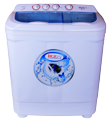 Machine à laver
 Ventilateur
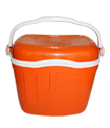 Glacière
 Chauffage
 Four éléctrique
- Nouveautés
- Qualité
- Actualités
- Contact
Attention Required! Cloudflare

After calculating cash flows from operating activities, you need to calculate cash flows from investing activities. This section of the cash flow statement details cash flows related to the buying and selling of long-term assets like property, facilities, and equipment. Keep in mind that this section only includes investing activities involving free cash, not debt. Cash flow statements are one of the three fundamental financial statements financial leaders use. Along with income statements and balance sheets, cash flow statements provide crucial financial data that informs organizational decision-making. While all three are important to the assessment of a company’s finances, some business leaders might argue cash flow statements are the most important.
Financial Decision-Making
Ideally, a company’s cash from operating income should routinely exceed its net income, because a positive cash flow speaks to a company’s ability to remain solvent and grow its operations. Cash flows from financing (CFF) is the last section of the cash flow statement. It measures cash flow between a company and its owners and its creditors, and its source is normally from debt https://www.kelleysbookkeeping.com/ or equity. These figures are generally reported annually on a company’s 10-K report to shareholders. Meaning, even though our business earned $60,000 in October (as reported on our income statement), we only actually received $40,000 in cash from operating activities. Increase in Accounts Receivable is recorded as a $20,000 growth in accounts receivable on the income statement.

Positive Cash Flow
When the number is negative, it may mean the company is paying off debt or is making dividend payments and/or stock buybacks. Purchase of Equipment is recorded as a new $5,000 asset on our income statement. It’s an asset, not cash—so, with ($5,000) on the cash flow statement, we deduct $5,000 from cash on hand. So, even if you see income reported on your income statement, you may not have the cash from that income on hand. The cash flow statement makes adjustments to the information recorded on your income statement, so you see your net cash flow—the precise amount of cash you have on hand for that time period.
Indirect method
Using the direct method, you keep a record of cash as it enters and leaves your business, then use that information at the end of the month to prepare a statement of cash flow. A balance sheet shows you your business’s assets, liabilities, and owner’s equity at a specific moment in time—typically at the end of a quarter or a year. Negative cash flow should not automatically raise a red flag without further analysis. Poor cash flow is sometimes the result of a company’s decision to expand its business at a certain point in time, which would be a good thing for the future. The completed statement of cash flows, which we’ll work towards computing throughout our modeling exercise, can be found below.
Investing activities include any sources and uses of cash from a company’s investments. Purchases or sales of assets, loans made to vendors or received from customers, or any payments related to mergers and acquisitions (M&A) are included in this category. In short, changes in equipment, assets, or investments relate to cash from investing. Cash flow statements are one of the most critical financial documents that an organization prepares, offering https://www.kelleysbookkeeping.com/qualified-transportation-fringe-benefit-and-loss/ valuable insight into the health of the business. By learning how to read a cash flow statement and other financial documents, you can acquire the financial accounting skills needed to make smarter business and investment decisions, regardless of your position. Based on the cash flow statement, you can see how much cash different types of activities generate, then make business decisions based on your analysis of financial statements.
- During the reporting period, operating activities generated a total of $53.7 billion.
- With the indirect method, you look at the transactions recorded on your income statement, then reverse some of them in order to see your working capital.
- The Lili Visa® Debit Card is issued by Choice Financial Group, Member FDIC, pursuant to a license from Visa U.S.A.
- While it gives you more liquidity now, there are negative reasons you may have that money—for instance, by taking on a large loan to bail out your failing business.
- For example, if you calculate cash flow for 2019, make sure you use 2018 and 2019 balance sheets.
A cash flow statement tracks the inflow and outflow of cash, providing insights into a company’s financial health and operational efficiency. In order to truly understand the insights provided by a cash flow statement, it’s important to pay attention to all details outlined on the statement, not just the bottom line. To help you get a better idea about determining your cash flow and assessing your business’s liquidity, we’ve prepared a few accounts payable ap definition examples of different cash flow statements, available for download here. We accept payments via credit card, wire transfer, Western Union, and (when available) bank loan. Some candidates may qualify for scholarships or financial aid, which will be credited against the Program Fee once eligibility is determined. Positive cash flow indicates that a company has more money flowing into the business than out of it over a specified period.
Cash Flow for Month Ending July 31, 2019 is $500, once we crunch all the numbers. After accounting for all of the additions and subtractions to cash, he has $6,000 at the end of the period. If we only looked at our net income, we might believe we had $60,000 cash on hand. In that case, we wouldn’t truly know what we had to work with—and we’d run the risk of overspending, budgeting incorrectly, or misrepresenting our liquidity to loan officers or business partners. Under Cash Flow from Investing Activities, we reverse those investments, removing the cash on hand. They have cash value, but they aren’t the same as cash—and the only asset we’re interested in, in this context, is currency.
Since it’s simpler than the direct method, many small businesses prefer this approach. Also, when using the indirect method, you do not have to go back and reconcile your statements with the direct method. The direct method takes more legwork and organization than the indirect method—you need to produce and track cash receipts for every cash transaction.
For this reason, the direct method of preparing a cash flow statement is usually less appealing for small businesses. For example, if a business sells electronics, cash from operating activities will include cash earned from sales, cash used to purchase the electronics, and other regular expenses like rent, salaries, and utilities. Whether you’re a manager, entrepreneur, or individual contributor, understanding how to create and leverage financial statements is essential for making sound business decisions. To help visualize each section of the cash flow statement, here’s an example of a fictional company generated using the indirect method. The result is the business ended the year with a positive cash flow of $3.5 billion, and total cash of $14.26 billion. Here’s an example of a cash flow statement generated by a fictional company, which shows the kind of information typically included and how it’s organized.